Third segment of the tarsi significantly broader than the second second and not longer than wide. Body compact; pronotum narrower than the elytra; elytra no more than 1.6 times as long as their combined width, with clearly projecting shoulders.
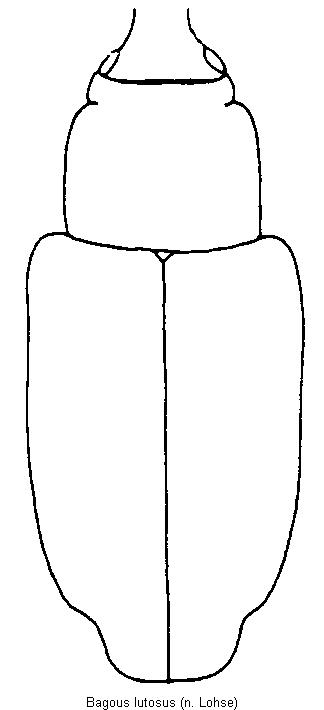
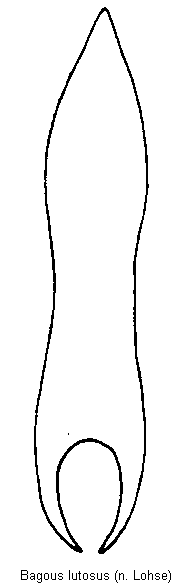
lutosus (Gyll., 1813)Elytra longer, 1.6 times as long as their combined width, with the slope of the beak-like extension at the apex not as steep [Abb. 1].. Elytra grey with blurry pale patches with the one over teh third interstice usually rather indistinct. Sides of the pronotum almost straight and parallel, first starting to significantly narrow around level with the transverse furrow. Penis [Abb. 2]. 3.4-4.5 mm. From Turkey and the Caucasus westwards over most of Europe; in Central Europe widely distributed but rare. Probably develops in Sparganium ramosum (bur reed) Elytra shorter and more steeply sloping towards the tip. ...3
Abb. 1Abb. 2
#3
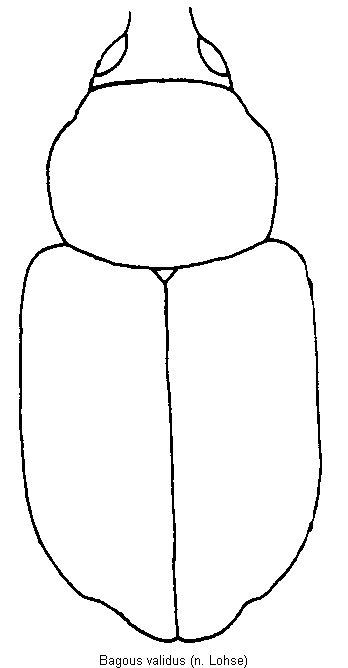
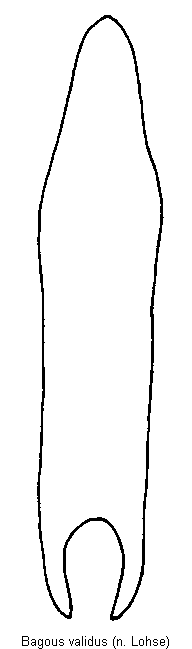
validus Rosh. → 4Pronotum slightly narrower than the elytra [Abb. 3], without a median furrow, broadest in the front third, weakly and roundly narrowing towards the base and strongly constricted towards the front. Upper surface yellowish-grey or brown, with short, darker brown longitudinal stripes on the elytra. Antennae reddish brown right up to the blackish keel. Legs brown; tarsi blackish. Penis [Abb. 4]. 4-6 mm. Distributed from southern Russia and the Balkans into south-east Central Europe: Hungary, Slovakia, Moravia, ?Austria Pronotum much narrower than the elytra [Abb. 5]. Third interstice of the elytra with a distinct pale patch (in fresh specimens).
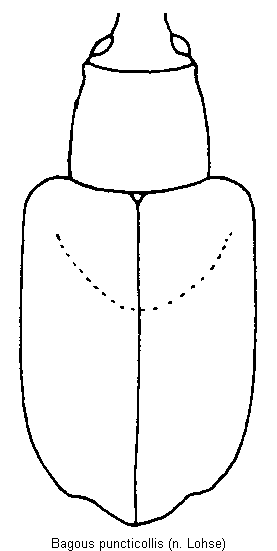
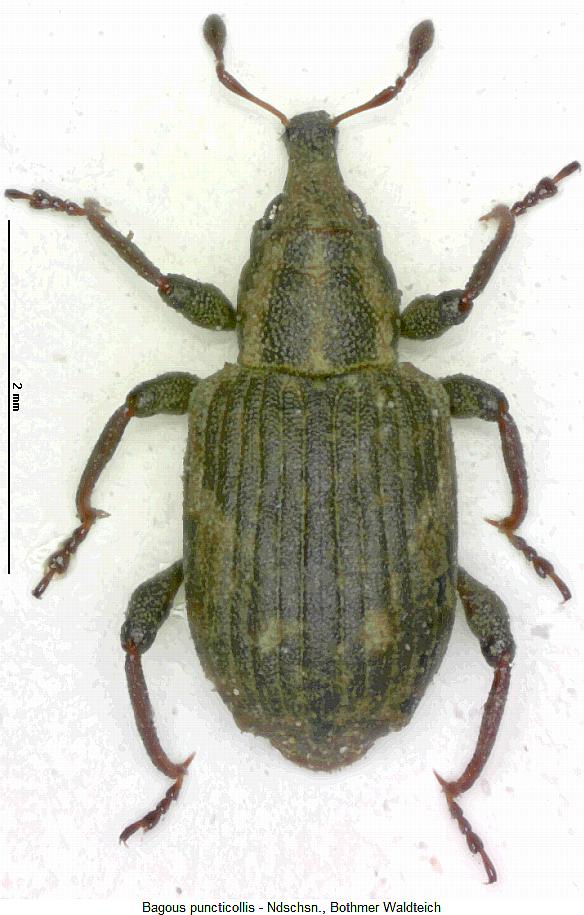
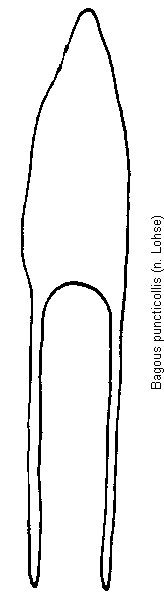
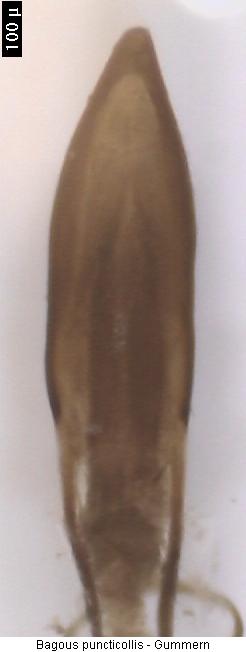
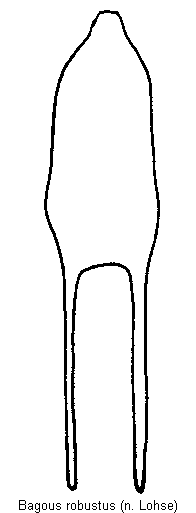
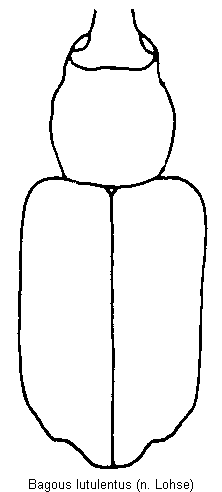
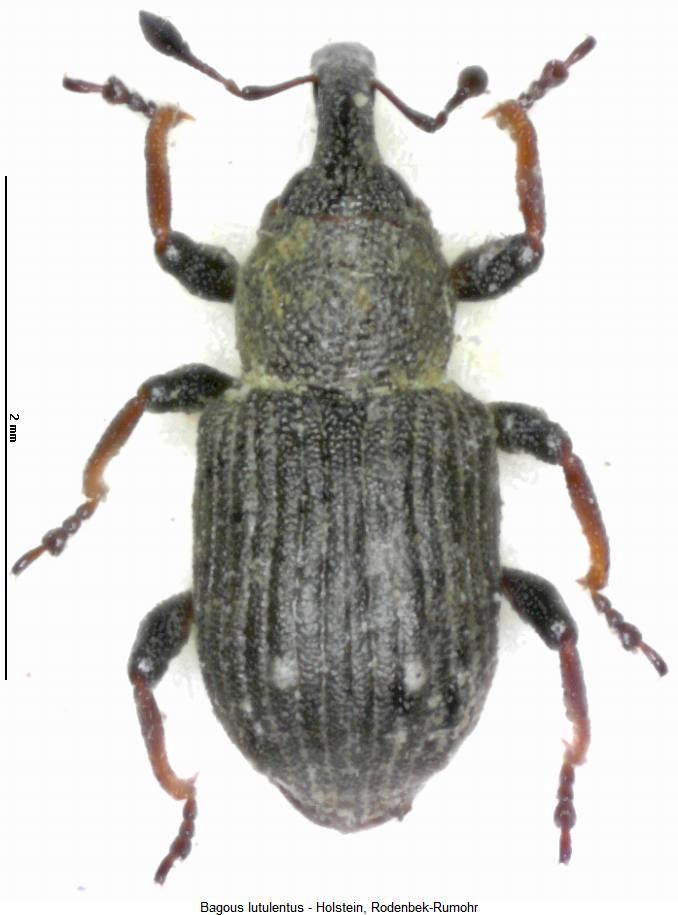
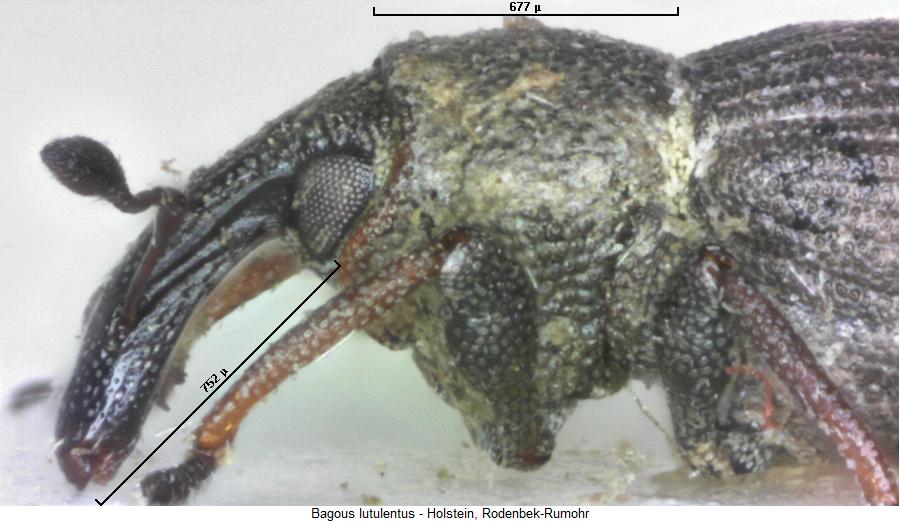
puncticollis Boh., 1845 robustus Bris., 1863Pronotum narrowing evenly towards the front or parallel-sided[Abb. 6], weakly convex in the longitudinal axis. Elytra with a v-shaped impression in the front half [Abb. 5]. Dark brown or dark grey. Antennae and legs reddish-brown; antennal club not darkened. Penis [Abb. 7][Abb. 8]. 3.3-4 mm. From the south of Northern Europe across Central Europe to France; in Central Europe rare to the north and in the middle - collected from Silesia, Bohemia, Slovakia and Salzburg but probably more widely distributed. Associated with Helodea, Hydrocharis and Stratiotes, often collected on these plants with glabrirostris. May to June. Sides of the pronotum rounded, narrowing towards the front and rear, distinctly convex in the longitudinal axis. Elytra without a v-shaped impression. Antennae (except for the darkened club) and legs reddish-brown; tarsi clearly darker than the last quarter of the tibiae. Tarsi shorter than in puncticollis; third segment broader and cordate. Penis [Abb. 9]. Has the appearance of a large, robust lutulentus and was formerly considered as a race of that species. Specimens from the north are smaller than those from southern Europe and have been classified as var. robustoides Neresh. & Wagner. The genitalia of small specimens should be checked to separate them from lutulentus. 3.5-5 mm. Finland, Central and Southern Europe, Anatolia, north Africa. Widely distributed in Central Europe but rarer than lutulentus. Associated with Alisma plantago-aquatica.
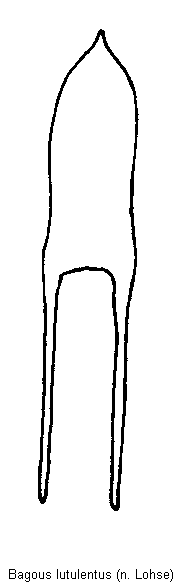
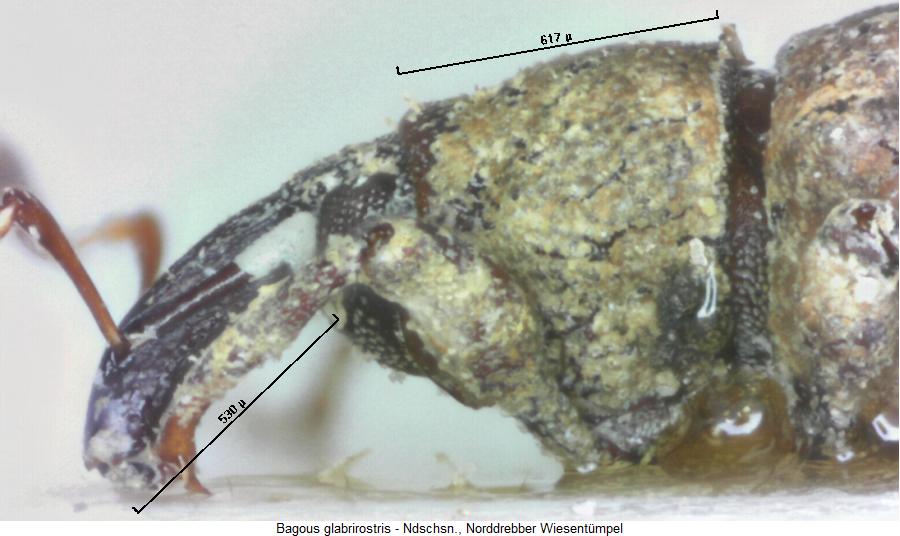
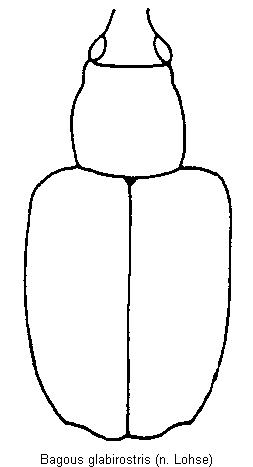
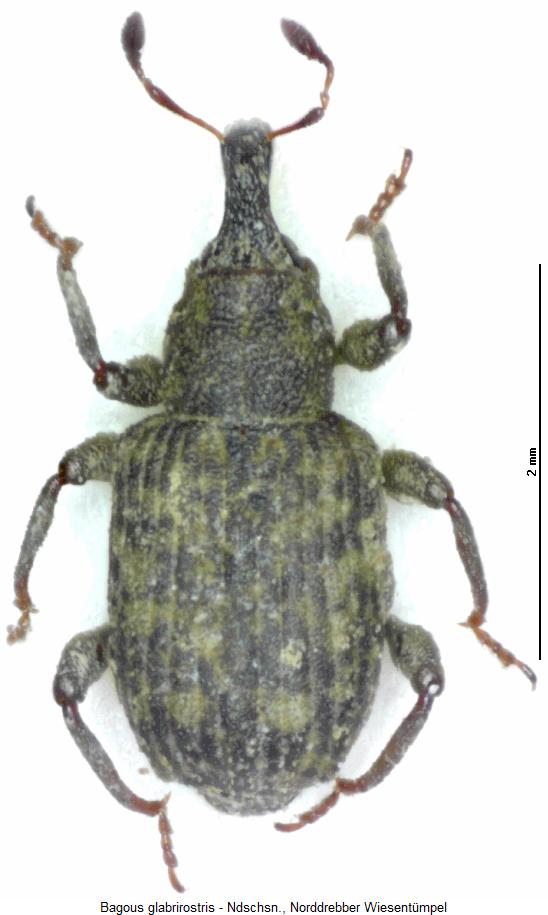
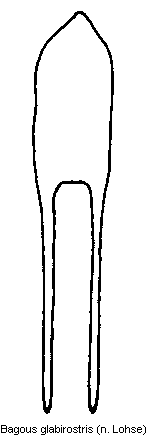
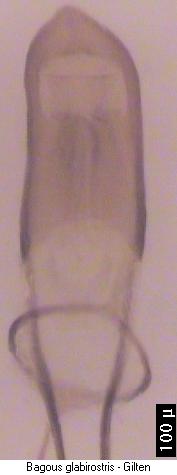
lutulentus (Gyll., 1813) → 6Tarsi black, always clearly darker than the last quarter of the tibiae, which are substantially dark in the middle. Sides of the pronotum cleary rounded, equally narrowing to the rear and to the front as far as the constriction [Abb. 10][Abb. 11]. Rostrum robust, as long as (♂) or longer than (♀) the pronotum [Abb. 12]. Penis [Abb. 13]. 2.2-3.2 mm. From Siberia westwards across the whole of Europe. Widely distributed and quite common in Central Europe. Larvae develop in Equisetum limosum. Overwintering adults found in June with the new generation emerging in July. (nigritarsis Thoms.). Pronotum only weakly rounded at the sides. Ends of the tibiae and tarsi uniformly brownish-red to brownish. Rostrum rather shorter than the pronotum in both sexes. [Abb. 14].
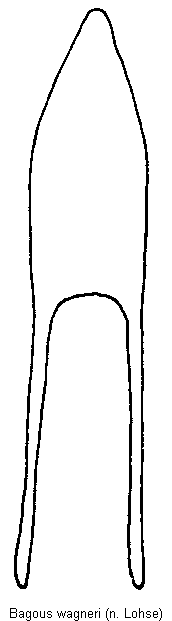
glabrirostris (Hbst., 1795)Elytra broader with a steeper slope to the rear. Pronotum rather more coarsely granular and narrower relative to the elytra [Abb. 15][Abb. 16]. Upper surface dark brown to dark grey; in fresh specimens narrow bands (sometimes shortened anteriorly) are present on the pronotum as well as patches on the second and third interstices of the elytra. Penis [Abb. 17][Abb. 18]. 2.3-3.2 mm. Westwards from Siberia over almost the whole of Europe, also north Africa. In Central Europe widely distributed and locally frequent. Associated with species of Potamogeton and Alisma but possibly also on Stratiotes·. Found almost all year. Elytra narrower and less steep towards the rear. Pronotum more finely granular and broader and larger compared to the elytra, similar to lutulentus [Abb. 10]. Coloration similar to glabrirostris, but the pronotum has clearer pale bands along the sides and sometimes also a fine median band which is interrupted in the middle. Elytra with pale patches around the second and third interstice, a patch near the shoulders and 2-3 pale patches towards the sides. Legs dark brown to black. Tibiae completely reddish brown like the tarsi or reddish brown in the last third. Penis [Abb. 19]. 2.3-2.5 mm. From western Asia (Azerbaijan, Armenia), across the Caucasus towards southern Europe, where the species has been recorded from Sardinia, northern Italy, Albania and Hungary. So far only two records from Central Europe, from Styria and Lower Austria ...wagneri Dieckmann
 Käfer Europas herausgegeben von Arved Lompe sind lizenziert unter den Bedingungen der Creative Commons International 4.0 Lizenz BY-SA (Namensnennung-Weitergabe unter gleichen Bedingungen)