Halstead, D.G.H. (1973 ): A Revision of the Genus Silvanus Latreille (s. l.) (Coleoptera : Silvanidae) - Entomology - Bulletin of the British Museum (Natural History), 29:39-112 >>>"F:\taxa\coleo\scans\halstead1973 Silvanus.pdf"
#1
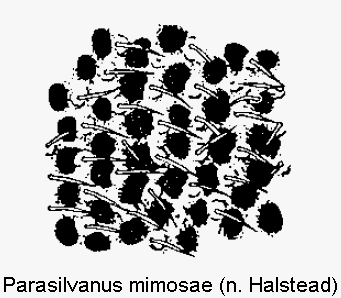
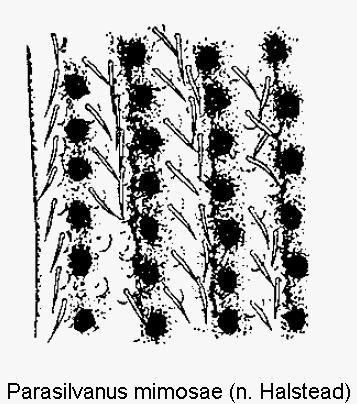
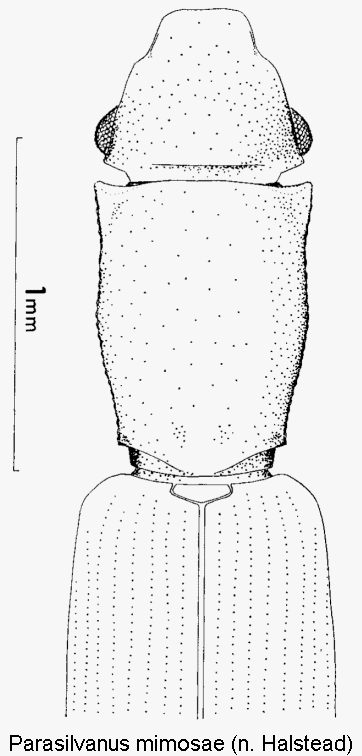
mimosae Halstead, 1973Head and pronotum punctate-reticulate [Abb. 1]; elytra punctate-striate, all interstriae equally raised [Abb. 2]; head and pronotum as in [Abb. 3].
Abb. 1Abb. 2Abb. 3
→ 2-Head and pronotum not punctate-reticulate, either interspaces much broader or puncturation entirely different; elytra different; head and pronotum not as above.
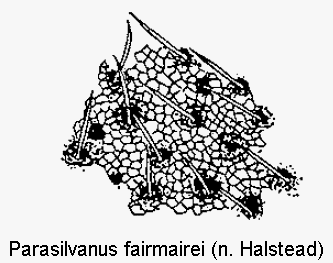
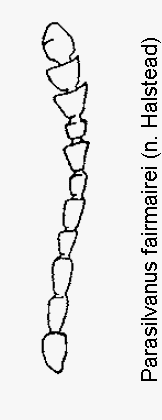
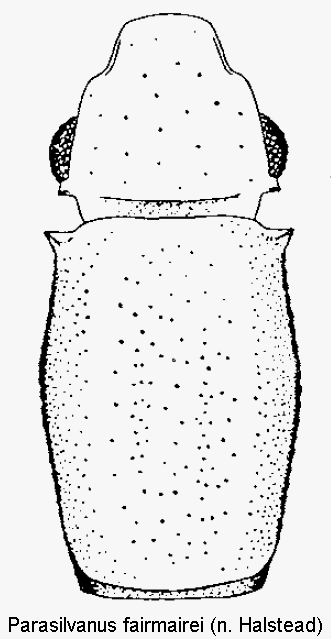
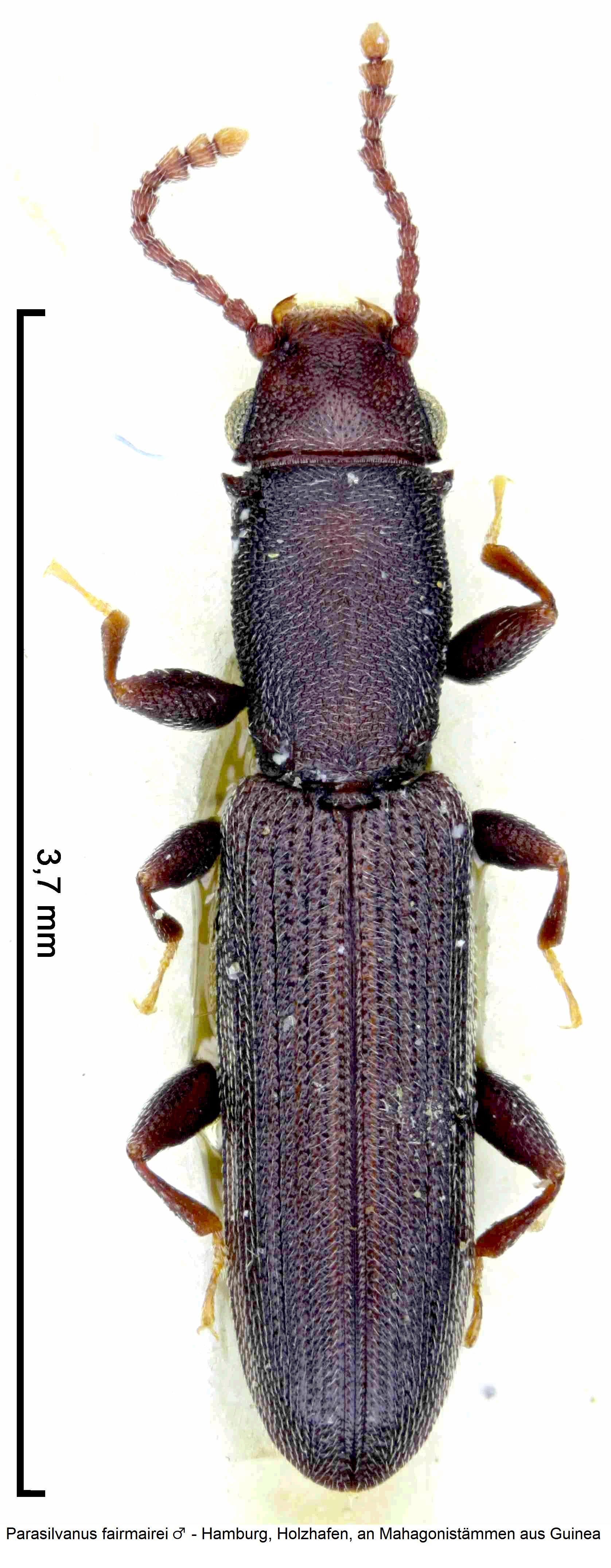
fairmairei Grouvelle, 1882Head appearing finely granulate due to densely reticulate interspaces, clypeus and frontal triangle with sparse puncturation [Abb. 4] different from that near eyes; without a fovea at clypeogenal emargination; 8th antennal segment as in [Abb. 5]; form of head and pronotum characteristic [Abb. 6]. Habitus [Abb. 7].
Abb. 4Abb. 5Abb. 6Abb. 7
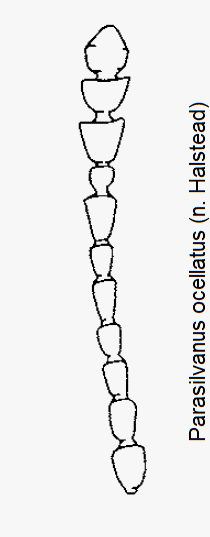
→ 3-Head not appearing finely granulate, puncturation of frontal triangle not obviously different from that of rest of head; with a fovea at clypeogenal emargination; antennae as in [Abb. 8]; pronotum moderately to extremely elongate.
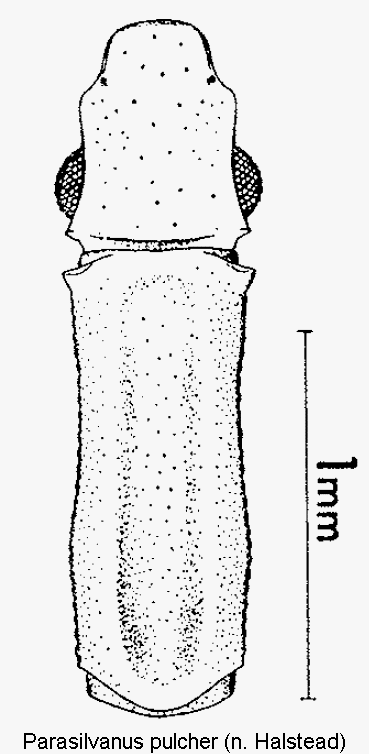
pulcher (Grouvelle, 1905)Extremely elongate species; form of head and pronotum diagnostic, pronotum behind anterior angles, broadest at basal third [Abb. 9]. Length 3.42-4.81 mm.
Abb. 9
→ 4-Moderately elongate species; pronotum and head not as above, pronotum behind anterior angles, broadest at middle.
tenuis (Grouvelle, 1889)Vertex of head with deep, obvious coarse punctures and fine setiferous punctures with slightly raised margins (slightly ocellate) [Abb. 10]; head slightly longer than broad (10.4-11/10); pronotum elongate (18-19/10), disc without obvious foveae (slight depressions are present) [Abb. 11].
Abb. 10Abb. 11
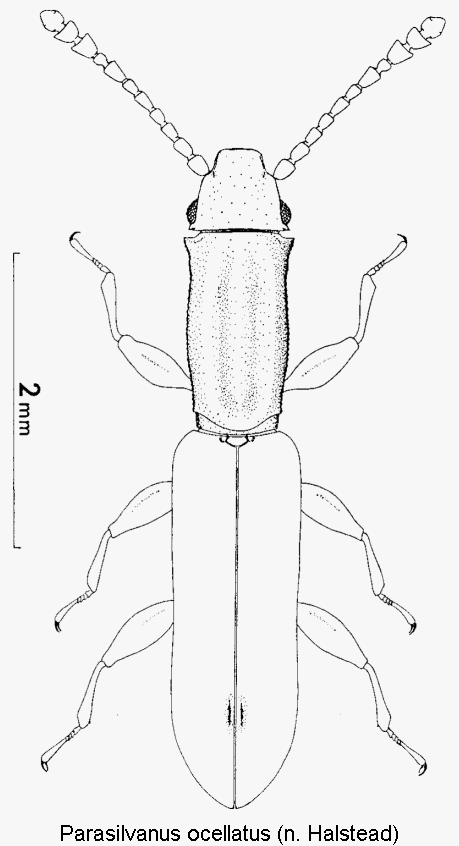
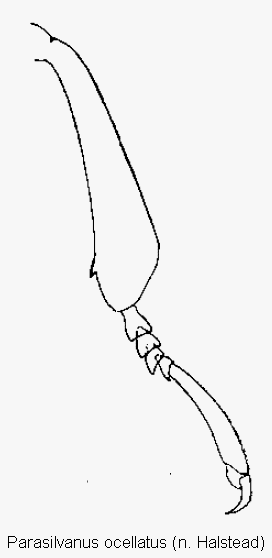
→ 5-Vertex of head with ocellate setiferous punctures dominant, coarse punctures present but less obvious; pronotal length/breadth 15-19/10, disc with shallow to deep lateral foveae, if with shallow foveae then head broader than long (11-12/10). #5 (4) Pronotum more elongate (16-19/10) with deep lateral foveae on disc; head often appearing elongate, although broader than long (10.1-10.4/10), [Abb. 12]; metasternal disc with well-defined lateral depressions and comparatively impunctate regions of caudal half obvious (only fine setiferous punctures present), interspaces dull to moderately shining; in ♂, metatibia with a lamellate tooth towards apex [Abb. 13] and elytra with sutural stria depressed near apical fourth [Abb. 12]. ...ocellatus (Grouvelle, 1889)
Abb. 12Abb. 13Abb. 12
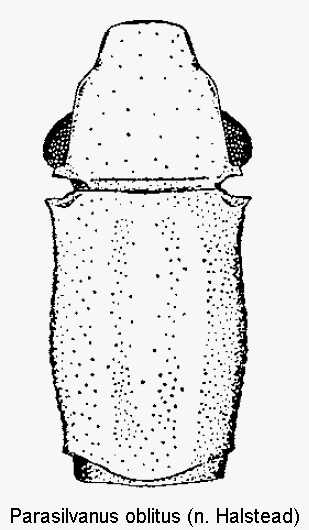
oblitus (Grouvelle, 1909)-Pronotum less elongate (15-16/10) with shallow ill-defined lateral depressions on disc; head more obviously broader than long (11-12/10), [Abb. 14]; metasternal disc without distinct lateral depressions hence impunctate regions (as above) ill-defined, interspaces shining; in ♂, sutural stria of elytra and metatibia simple.


 Käfer Europas herausgegeben von Arved Lompe sind lizenziert unter den Bedingungen der Creative Commons International 4.0 Lizenz BY-SA (Namensnennung-Weitergabe unter gleichen Bedingungen)